
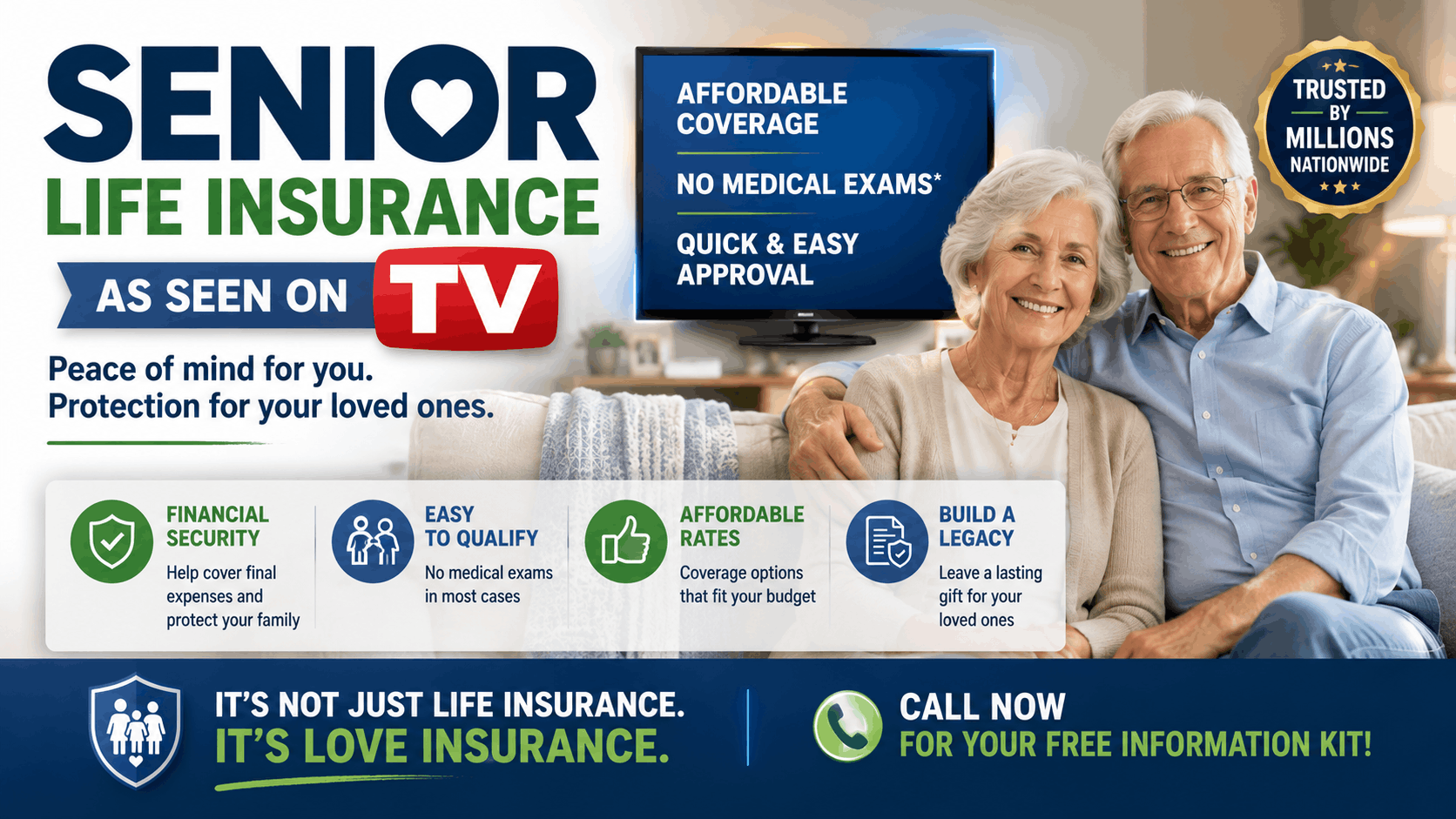
If you’ve watched daytime television any time in the last few years, you’ve seen them: friendly senior spokespeople, warm music, and a toll-free number promising affordable life insurance with no medical exam. These commercials have become so common that “senior life insurance as seen on TV” has practically become its own category of product in people’s minds. But what are these ads actually selling, and is the coverage behind them worth it? Here’s a clear-eyed breakdown.
What Does “Senior Life Insurance As Seen on TV” Actually Mean?
It’s a marketing category, not a policy type
Senior life insurance as seen on TV is a type of insurance sold through TV ads that often stress how easy it is to get and how cheap it is. Reputable companies that focus on final expense, burial, or whole life insurance usually offer these kinds of policies. In other words, “as seen on TV” doesn’t describe a special product line, it describes how the policy is marketed. Underneath the ad, you’re typically looking at a final expense or whole life policy.
Who these ads typically target
These ads are mostly aimed at people over 50 who may have trouble getting regular life insurance because of their age or health. That’s the core appeal: coverage designed for people who might otherwise get turned away or priced out of a standard policy.
Why These Ads Are So Popular With Seniors
Simple, phone-based application process
Seniors don’t have to go through long forms or complicated medical tests anymore with many of these plans. Instead, they can call a toll-free number, talk to an agent, and get coverage in a matter of minutes.
Emotional appeal
Television advertising helps build trust. Seeing friendly faces of older people, testimonials, and simple explanations makes viewers feel at home, and that emotional comfort is a big part of why the format works so well for this audience.
Promise of guaranteed acceptance
One of the reasons many seniors choose these policies is the range of features designed with their needs in mind, chief among them guaranteed acceptance: many companies don’t require medical exams or health questions, so seniors can qualify regardless of their medical history.
Common Features Promised in These Ads
| Feature | What It Typically Means |
|---|---|
| Guaranteed acceptance | No medical exam or health questions required to qualify |
| Fixed premiums | The monthly rate is locked in and won’t increase over the life of the policy |
| Immediate coverage | Some policies pay the full death benefit right away rather than after a waiting period |
| Return of premium | Certain plans claim to return premiums paid if the policyholder outlives the term |
Immediate vs. graded coverage
This distinction matters more than almost anything else in the ad. Many policies come with immediate coverage, so if the policyholder passes away even a few months later, the full death benefit is paid out. Other plans, however, apply a graded death benefit for the first two years, meaning beneficiaries only receive a partial payout (or a return of premiums) if death occurs during that early window from natural causes.
Ad-Claim Glossary: What the Language Really Means
TV ads are built for quick, catchy phrasing. Here’s what’s actually behind the marketing language.
| Ad Phrase | Plain English Meaning |
|---|---|
| “Guaranteed acceptance” | No medical exam or health questions, but coverage amounts are usually smaller |
| “Rates never increase” | Premiums are fixed for life, standard for most whole/final expense policies, not unique to these ads |
| “No medical exam” | Simplified issue underwriting, approval is faster but coverage amount is capped |
| “We give it all back” | A return-of-premium feature, generally only applies under specific policy terms |
| “$X.XX a month” | Often the lowest advertised tier, actual coverage amount at that price is usually very small |
The Pros of Senior Life Insurance As Seen on TV
- Easy qualification for people with health conditions. You can still get senior life insurance as seen on TV even if you have diabetes, heart problems, or other long-term illnesses.
- Fast approval, no complicated paperwork. A phone call is often all it takes to get a quote and start the application.
- Peace of mind for funeral costs. The main appeal is locking in a death benefit to pay for funeral and burial or cremation costs so family or friends don’t have to cover them.
- Lower cost if purchased earlier. If you’re relatively young (by senior insurance standards), you can lock in a low monthly payment for life.
The Cons of Senior Life Insurance As Seen on TV
- Low face amounts relative to premium paid. Colonial Penn’s well-known “$9.95 plan” is a good example: this amount only covers a few hundred dollars in death benefit, hardly enough to cover a funeral and burial.
- Higher locked-in rates if purchased later in life. The later you wait to buy, the more expensive the policy becomes, and once locked in, an older buyer’s monthly payment stays higher for the life of the plan.
- Waiting periods on some plans. Many companies give a two-year waiting period plan to very healthy people who could actually qualify for immediate coverage without the wait elsewhere.
- Fixed income strain. A high locked-in monthly payment can be tough for seniors living on a fixed income.
Red Flags to Watch For
Before signing up over the phone, watch for these warning signs:
- Face value that doesn’t match the premium. If the monthly cost sounds too good to be true, check exactly how much death benefit it actually provides.
- Vague answers about waiting periods. Ask directly whether the plan has a graded death benefit period and what it pays out if death occurs during that window.
- No comparison offered. A single company pushing one plan on the phone can’t tell you how it stacks up against competitors.
- High-pressure tactics. Reputable agents give you time to think it over rather than pushing for an immediate decision.
- Unclear rate guarantees. Confirm in writing that the premium truly won’t increase, rather than relying on the ad’s claim alone.
How These Compare to Buying Through an Independent Broker
Access to multiple carriers vs. one company
TV ads represent a single company’s offer. An independent broker, by contrast, can compare real quotes from multiple top-rated insurers, which often surfaces better value than whatever the commercial happens to be running.
Personalized guidance vs. one-size-fits-all
TV ads can be helpful for raising awareness, but they may not provide all the information needed to make a fully informed decision. It’s generally worth doing independent research, comparing policies, and consulting a financial advisor or insurance professional before committing to anything.
The best life insurance for senior citizens depends heavily on age and health conditions, which is exactly why a personalized comparison, rather than a blanket TV offer, tends to serve buyers better. If you’re also weighing a fixed-length option, it can help to see how term life insurance compares to a whole or final expense policy before you commit.
Before You Call the Number on the Screen
Run through this quick checklist first:
- Know your coverage goal. Are you covering funeral and burial costs specifically, or trying to leave a broader financial legacy?
- Ask about waiting periods. Confirm whether the plan pays full benefits immediately or includes a graded period.
- Compare face value to premium. Make sure the death benefit amount actually matches your real funeral and final expense costs.
- Get more than one quote. Call the TV number if you like, but also get quotes from an independent source before deciding.
- Read the fine print. Ask for the policy details in writing rather than relying only on what the commercial promised.
Frequently Asked Questions
- Is senior life insurance as seen on TV a scam?
- No, these are typically legitimate final expense, burial, or whole life policies sold by real insurance companies. The concern isn’t legitimacy, it’s value. Some advertised plans offer very low coverage amounts relative to their premiums, so it’s important to read the details rather than judge the policy by the commercial alone.
- Do these policies require a medical exam?
- Most advertise guaranteed acceptance with no medical exam or health questions required, which is a major part of their appeal for seniors with pre-existing conditions.
- How much coverage do these policies actually provide?
- It varies widely. Some low-cost plans, like the well-known $9.95-a-month option, only provide a few hundred dollars in death benefit, while other policies offer more substantial coverage at a higher premium. Always confirm the actual face value before enrolling.
- Can I get better rates by shopping around instead of calling the TV number?
- Often, yes. Working with an independent broker who can access multiple carriers tends to turn up better rates and coverage options than a single company’s advertised plan.
TV ads can be a helpful starting point for understanding what’s available, but the best policy for you depends on your age, health, and actual coverage needs, not just what’s advertised between commercial breaks. Future Proof Life Insurance can help you compare real senior life insurance options side by side, so you know exactly what you’re getting before you commit.